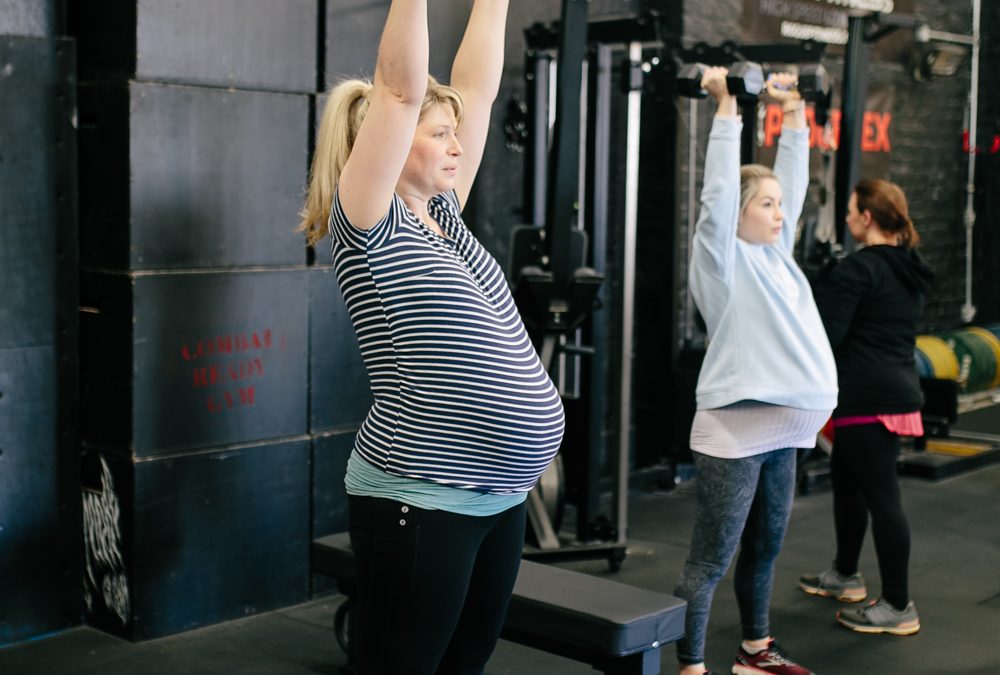
There is more research than ever before into exercise in pregnancy, and 2025 brought some strong research into the effects exercise has on women’s bodies and on babies. Here are my favourite pieces of research.
Exercising 300+ minutes a week in late pregnancy: what the research found
First up is the study that found exercising for more than 300 minutes per week in late pregnancy was well tolerated by highly active individuals, and was associated with
- Lower risk of delivery complications, and
- No negative impact on baby’s health
Importantly, it was noted that higher weekly volumes of exercise were associated with increased odds of diastasis recti postpartum – where the tissue between the two parts of the rectus abdominus( “six-pack muscle”) becomes stretched. Diastasis recti is not something to be fearful of, and is a natural and normal response by a healthy body to pregnancy – what is important is screening and support for diastasis postnatally.
However, women who exercise for more than an hour per session or up to 300 minutes per week are LESS likely to have diastasis than the postnatal population as a whole.
Read more at Miles and Maternity: A Survey of Long-Duration Exercise During Pregnancy.
Resistance training in pregnancy: effects on delivery, pelvic floor and baby
Next up is my favourite: how does resistance training (that’s weights, machines, bands and bodyweight strength exercise) during pregnancy affect delivery, pelvic floor outcomes and fetal health?
It turns out that there are no studies that look at women who lifted more than 10kg weights – much of the research looked only at resistance bands or hand weights of 1-2kg. More research is required urgently!
What there is evidence for, however, is that compared with control groups, resistance training was associated with approximately
- 60% lower chance of gestational hypertension
- 40% lower chance of gestational diabetes
- 50% lower chance of perinatal mood disorders
- 30% lower chance of macrosomia (baby born weighing over 8lb 13oz, which is linked to health risks.
High-intensity lifting in pregnancy: maternal and fetal responses
There was investigation into maternal and fetal responses to high-intensity resistance exercise – namely barbell back squats, supine bench press, and deadlifts at 70, 80 and 90% of 10RM with and without breath-holding.
The research found:
- Although maternal heart rate increased with exercise intensity
- Fetal heart rate and umbilical blood flow metrics stayed normal – even during heavy lifts and the Valsalva manouvre
- No bradycardia (reduced heart rate) or adverse effects were observed in fetuses
Conclusion: lifting heavy with proper guidance and monitoring appears to be well-tolerated by both mum and baby during mid-pregnancy.
Ultramarathon training during pregnancy: a real-world case study
Then there is the amazing case study of a highly experienced ultramarathoner who trained through two pregnancies, one with twins. In the twin pregnancy, she ran 3,394km; in the singleton pregnancy she ran 5,838km. Needless to say this far exceeds the levels recommended by current physical activity guidelines for pregnancy!
She did so without injuries or long-term adverse effects, which suggests that ultramarathon training during pregnancy may be well tolerated by experienced ultramarathoners. The researchers stress that athletes training at such levels should work closely with a healthcare provider who has experience working with pregnant athletes.
Read more at Running for two (or three!): the journey of an ultramarathoner across two pregnancies.
Much more research being done into pregnancy exercise and although there are still large gaps in the knowledge, it is great to be able to look at research rather than listening to opinions.
This blog has been compiled from the work of Dr Margie Davenport, lead researcher at the Program for Pregnancy and Postnatal Health. You’ll find her on Instagram where her posts are full of excellent and accessible information.